For those who want to understand why a brand sells, not just why it appeals.
This programme is designed for students who are:➜ Passionate about fashion, luxury or beauty, and curious about what goes on behind the shop window: prices, margins, customers, distribution
➜ Drawn to the real-world challenges of a fashion house, brand or store: launching a collection, winning customers, growing revenue
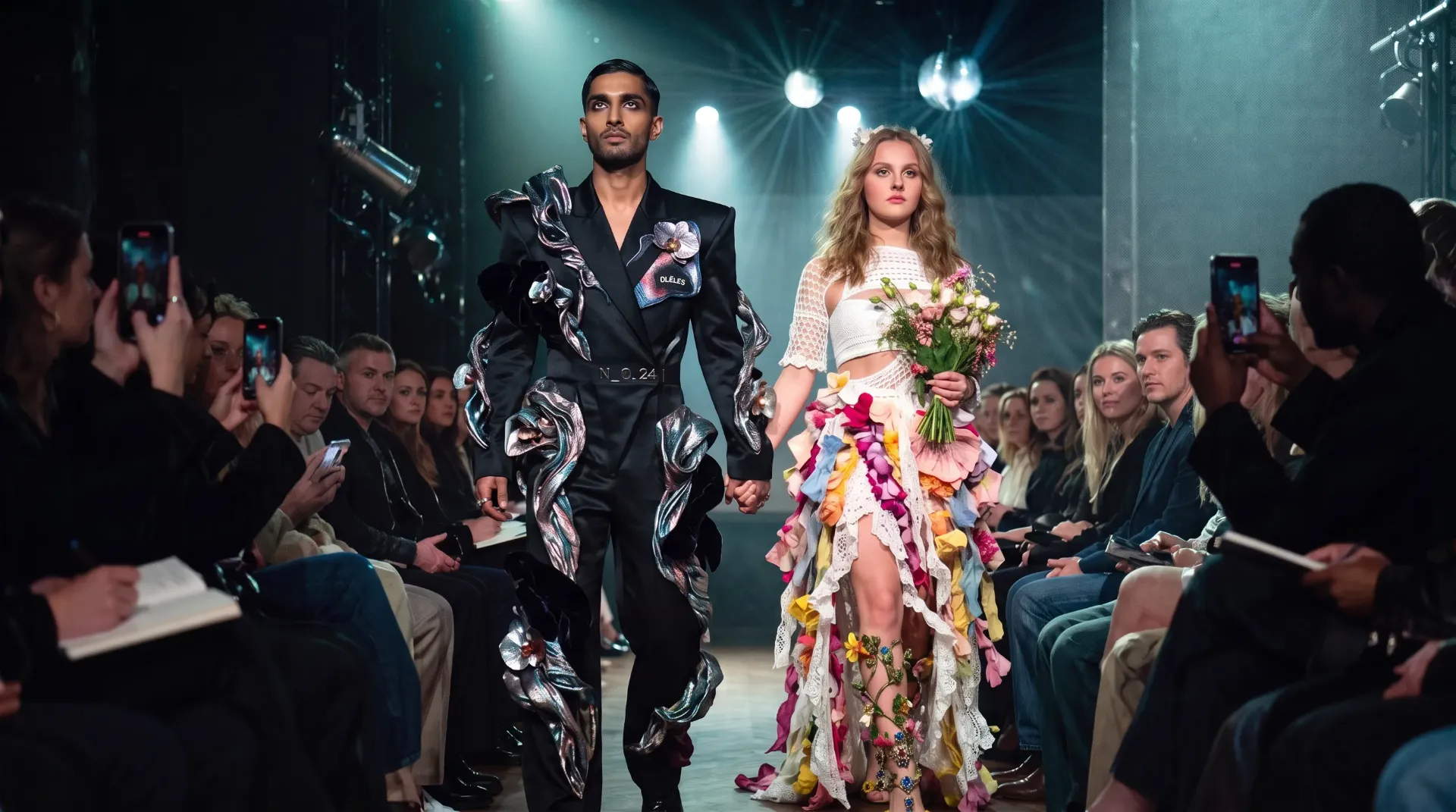
➜ Keen to learn by doing: a fashion show, a magazine, a pop-up store, in front of a real audience
➜ Determined to master AI rather than be overtaken by it
Students discover the economics of fashion, beauty and luxury, and learn to grow a brand methodically: decoding a market, building an audience, designing a campaign, measuring results. Fashion culture is treated as an asset: it is what makes a strategy credible in the eyes of a fashion house. Each year culminates in a signature project: a fashion show in Year 1, a fashion magazine in Year 2 and a pop-up store in Year 3.
Programme
Discover the full content of the programme
Year 1 lays the foundations through four teaching blocks: business, AI & digital, fashion, beauty & luxury, and building a career project. It culminates in signature project #1: the EIDM fashion show.
Business — Business fundamentals · 30%
Marketing fundamentals & consumer behaviour
Sales techniques & 360° communication
Business models & reading an income statement
Business English
AI & Digital — Prompting, content & no-code · 30%
Generative AI fundamentals & prompting
AI-augmented visual creation, visual culture & colour
Social media & content formats
Data literacy & no-code 101: your first automated workflow
Responsible AI: copyright & brand image
Fashion, Beauty & Luxury — The fashion, beauty & luxury ecosystem · 30%
Players, markets & international
Fashion history & trends
Garments: shapes, materials, buying & sourcing
Production of signature project #1 — EIDM fashion show, upcycling workshop
Career — Discovering yourself · 10%
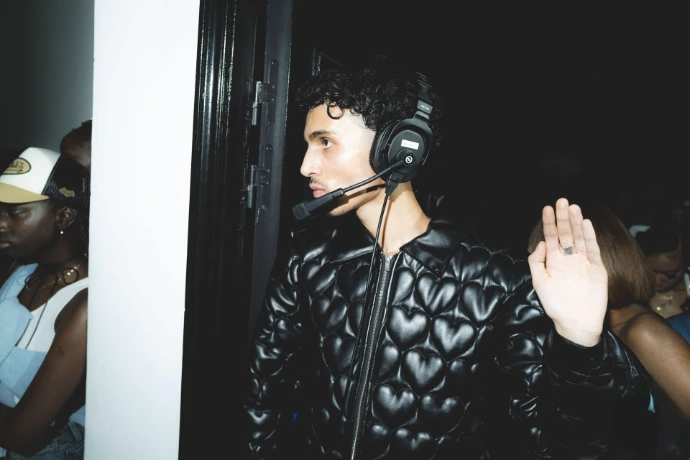
Signature project #1 — EIDM fashion show: milestone of the year, professional jury · Portfolio 1/3
Discovery internship (8 weeks) & debrief
Career workshops: CV, networking, personal branding
Public speaking, stress & time management
*This programme is not exhaustive; course content or terminology may change from one year to the next
Year 2 puts the fundamentals into practice: marketing, data and AI serving a real brand and a real store, leading up to signature project #2: the pop-up store.
Business — Marketing, management & entrepreneurship · 30%
Operational marketing & activation, communication plan
Business management & budget control
Production of signature project #2 — pop-up store: business plan & operating account
Business English
AI & Digital — AI workflows & data marketing · 30%
AI workflows & marketing automation (CRM, content)
E-commerce & social media
Data analytics & marketing dashboards (KPIs)
Fashion image production & digital fashion (3D, generative AI)
AI-augmented brand writing & publishing
Fashion, Beauty & Luxury — Product, merchandising & brands · 30%
Societal influences, trend & market research
Beauty & cosmetics: market, brands, distribution
Luxury brand codes & image
Visual & collection merchandising, applied to the pop-up store
Career — Building yourself · 10%
Signature project #2 — pop-up store: milestone of the year, presentation to the brand · Portfolio 2/3
Immersion internship (12 weeks)
Soft skills & career integration
Career workshops: choosing your Year 3 specialisation
*This programme is not exhaustive; course content or terminology may change from one year to the next
Year 3 is the specialisation year: the Business and AI & Digital blocks merge into one main block, AI-augmented marketing & communication, which prepares for the RNCP42050 certification. Fashion, Beauty & Luxury and Career remain core subjects. The year culminates in signature project #3: the fashion magazine.
Business + AI & Digital — AI-augmented marketing & communication · 60%
Strategy: brand management, omnichannel business development & e-business
Management: budgeting, impact measurement & KPIs, project management
Multi-format content & storytelling, AI agents for content production
Customer relations: CRM & AI personalisation, e-reputation & social listening
Production of signature project #3 — fashion magazine
Choice of specialisation: Retail & Customer Experience · Branding & Image · Event Management
Fashion, Beauty & Luxury — Managing a luxury brand · 30%
Group strategies & competitive intelligence
Luxury retail & distribution, international markets
Product & collection management: assortment, sell-through, pricing
CSR, responsible supply chain & second-hand
Fashion law & intellectual property
Career — Landing a job · 10%
Signature project #3 — fashion magazine: milestone of the year · Portfolio 3/3
Work-study or 12-week internship, individual follow-up
Job search / further studies studio
The art of the pitch
*This programme is not exhaustive; course content or terminology may change from one year to the next
Where can you study this programme?
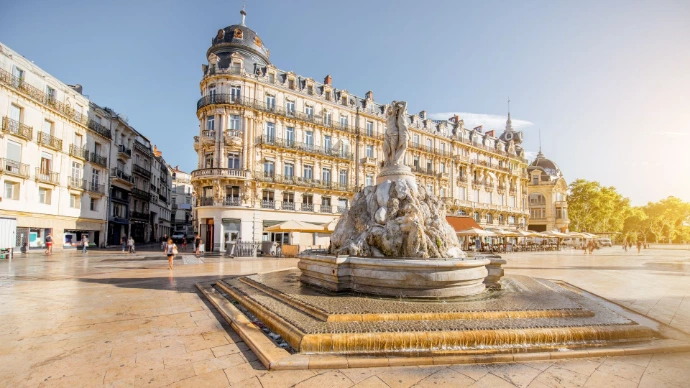
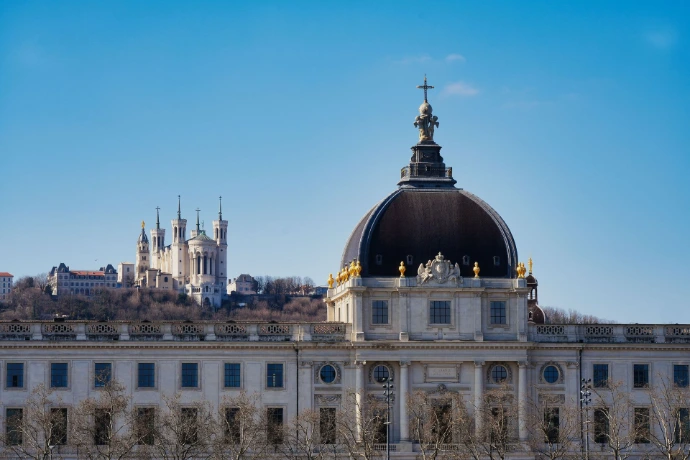
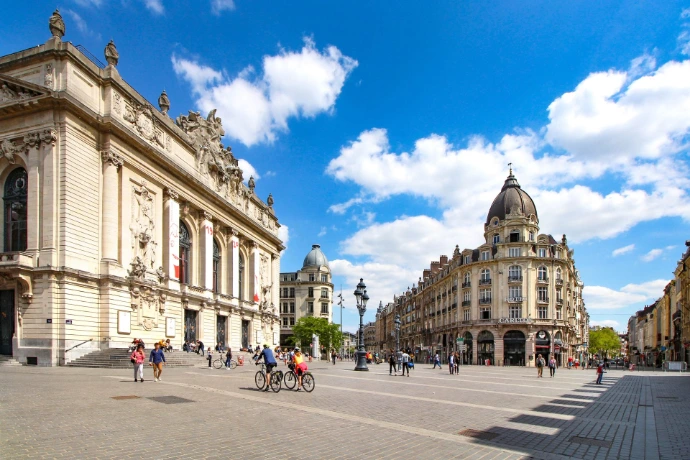
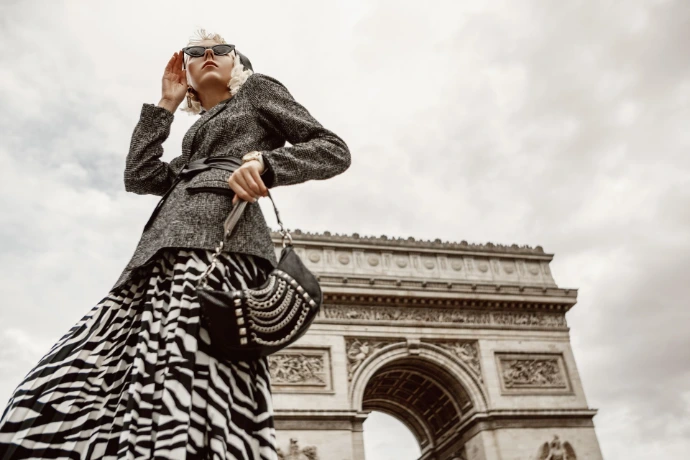
Why choose this Bachelor?
International opening
International mobility
+
The seminars
1 to 3 weeks
+
Semester abroad
In the 2nd year - Optional
Go study at an ACE Education campus or at a partner university to discover another culture of fashion and luxury.
76%
Pass rate for candidates for the school-awarded qualification “Bachelor Fashion Business” for the 2024 cohort
66%
Pass rate for candidates for the school-awarded qualification “Bachelor Fashion Communication & Marketing” for the 2024 cohort
59%
Pass rate for candidates for the school-awarded qualification “Bachelor Management du Luxe” (Luxury Management) for the 2024 cohort
After the Bachelor
After graduating, students can enter the workforce immediately or continue their studies at EIDM at postgraduate level: Mastère in Marketing & Communication Strategy Management — Luxury & Creative Industries.The roles targeted by the certification
Once you have graduated, you will be able to work in one of these sectors and take up these roles linked to the qualification.
➜ Beauty, fragrance and cosmetics
➜ Jewellery, watchmaking and leather goods
➜ Retail, e-commerce and department stores
➜ Second-hand, resale and new distribution models
➜ FashionTech and RetailTech start-ups
➜ Communication, influencer marketing and content creation agencies
➜ Fashion media, publishing and content platforms
➜ Events, trade fairs and fashion shows
➜ Design, lifestyle and cultural institutions
Foire aux questions – Bachelor Chargé de Développement Marketing & Communication — Luxe & Industries Créatives
Un Bachelor en 3 ans de l'EIDM, business school des industries créatives, appliqué à la mode, à la beauté et au luxe. Il forme au marketing, à la communication et à la vente : analyser un marché, bâtir une audience, vendre, fidéliser, mesurer. L'IA y est enseignée comme une discipline à part entière.
Aux bacheliers passionnés de mode, de beauté ou de luxe, curieux de ce qui se joue derrière la vitrine (prix, marges, clients, distribution), qui veulent apprendre en faisant devant un vrai public et maîtriser l'IA plutôt que la subir. Le programme vise un profil qui croise business, culture de ces univers et relation client.
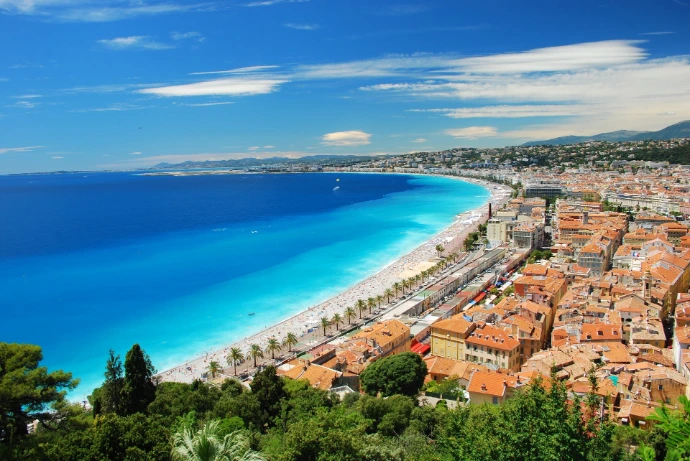
3 ans, 180 crédits ECTS (60 par an). Enseignement en français. Campus EIDM de Paris, Lille, Lyon, Montpellier et Nice. Formation initiale, avec une alternance possible en 3e année. Première rentrée : septembre / octobre 2027.
Quatre blocs pédagogiques : Business (30 %), AI & Digital (30 %), Fashion, Beauty & Luxury (30 %), Career (10 %). Trois années progressives : Découvrir (fondamentaux), Appliquer (marketing, data et IA au service d'une marque et d'une boutique), Se spécialiser (bloc marketing-communication & IA de 60 %). En 3e année, spécialisation au choix : Retail & Expérience Client, Branding & Image ou Event Management.
Le diplômé sait : élaborer et chiffrer un plan marketing-communication omnicanal, puis en mesurer l'impact par des KPI ; produire une campagne multi-formats avec des agents IA ; personnaliser la relation client via un CRM ; analyser la stratégie d'une maison (distribution, assortiment, prix, RSE) et formuler des recommandations.
Le programme est ouvert à tous, avec ou sans connaissances en programmation. L'IA et le digital s'apprennent par la pratique : dès la 1re année, on automatise une tâche simple sans coder. Les étudiants utilisent des outils professionnels comme Claude, Canva, Photoshop, Make, Shopify, HubSpot, Looker Studio, n8n ou Figma.
Trois éléments : une approche business school, où la culture mode sert à rendre une stratégie crédible et où une collection se juge aussi à son taux d'écoulement ; un socle IA enseigné comme une discipline à part entière, avec un bloc AI & Digital de 30 % dès la 1re année ; trois projets signature menés devant un vrai public (défilé, pop-up store, magazine), pilotés comme de véritables affaires.
Deux certifications à l'issue de la 3e année : le diplôme d'établissement EIDM « Bachelor Chargé de Développement Marketing & Communication — Luxe & Industries Créatives » (180 ECTS), délivré par ACE Education, et le titre RNCP de niveau 6 « Chargé de développement marketing et communication » (RNCP42050), co-délivré par MediaSchool.
Oui, via le titre RNCP42050 : c'est une certification professionnelle de niveau 6 (niveau bac+3) enregistrée par France Compétences le 1er avril 2026 et reconnue par l'État. Le Bachelor lui-même est un diplôme d'établissement, pas un diplôme national de licence.
En contrôle continu (études de cas, projets signature, soutenances devant des jurys professionnels, portfolio) et en sessions d'examens. Le diplôme d'établissement est validé par l'obtention des 180 ECTS. Le titre RNCP est obtenu en validant chacun de ses blocs de compétences, lors d'épreuves certificatives dédiées.
Entrer directement dans la vie active, ou poursuivre en cycle supérieur EIDM.
➜ Mastère Manager des Stratégies Marketing & Communication — Luxe & Industries Créatives : passer de la mise en œuvre à la stratégie, avec l'économie des marchés du luxe, le P&L d'une maison, le pricing et le business plan ; un bloc innovation de 30 % au choix, Business innovation (nouveaux modèles économiques, IA, RSE et circularité) ou Creative innovation, éprouvé pendant deux ans d'alternance.
Être titulaire d'un baccalauréat ou d'un titre de niveau 4 équivalent.
Oui. En 2e année : bac (ou titre de niveau 4) et 1re année d'études supérieures validée (60 ECTS). En 3e année : bac+2 (titre de niveau 5) ou 120 ECTS validés. Dans les deux cas, de préférence dans le domaine du programme. Le jury d'admission peut accorder une dérogation aux candidats justifiant d'au moins 2 ans d'expérience professionnelle.
Oui, en 3e année, en contrat d'apprentissage ou de professionnalisation. Les 1re et 2e années se suivent en formation initiale. En 3e année, les étudiants qui ne sont pas en alternance effectuent un stage de 12 semaines.
Une expérience chaque année : un stage découverte de 8 semaines en 1re année, un stage de 12 semaines en 2e année, une alternance ou un stage de 12 semaines en 3e année, avec un suivi individualisé. Un portfolio construit sur les 3 ans rassemble les réalisations.
Chaque année culmine dans un projet réel, mené de bout en bout devant un vrai public : un défilé de mode en 1re année, un pop-up store en 2e, un magazine de mode en 3e. Chacun se pilote comme une affaire : budget, partenaires, objectifs, résultats mesurés. Les étudiants de l'EIDM Paris ont déjà ouvert quatre pop-up stores depuis 2022.
Quatre familles de métiers, de 26 à 38 k€ bruts annuels à l'embauche : métiers transverses (chargé de communication 30–35 k€, webmarketing & e-commerce 30–36 k€, trade marketing 30–35 k€) ; retail & expérience client (visual merchandiser 28–34 k€, e-merchandiser 30–38 k€) ; branding & image (social media manager 32–36 k€, relations presse & influence 28–32 k€) ; événementiel (28–34 k€). Ordres de grandeur, Île-de-France, 0 à 2 ans d'expérience.
Maisons de mode et de luxe ; beauté, parfums et cosmétiques ; joaillerie, horlogerie et maroquinerie ; retail, e-commerce et grands magasins ; seconde main ; start-ups FashionTech et RetailTech ; agences de communication et d'influence ; médias mode ; événementiel ; design, art de vivre et institutions culturelles.
Importante. Les soutenances se déroulent devant des jurys professionnels : le défilé de 1re année est présenté à un jury de professionnels, et les résultats du pop-up store de 2e année sont défendus devant la marque partenaire. S'y ajoutent un stage ou une alternance chaque année.
Un bloc « Career » représente 10 % du programme chaque année : ateliers CV, réseau et marque personnelle dès la 1re année, insertion professionnelle et choix de la spécialisation en 2e année, puis studio de recherche d'emploi ou de poursuite d'études et art du pitch en 3e année. Le portfolio sert de vitrine auprès des recruteurs.
Oui, grâce à des séminaires internationaux optionnels proposés pendant les vacances scolaires : Milan en 1re année, Marrakech en 2e année, Londres en 3e année. Les marchés internationaux de la mode et du luxe sont aussi étudiés dans le programme.
Le programme est enseigné en français, avec des cours de Business English en 1re et 2e année. Des options d'anglais, d'espagnol et de préparation au TOEIC (avec ou sans préparation à l'examen) sont proposées à l'inscription.
They chose EIDM
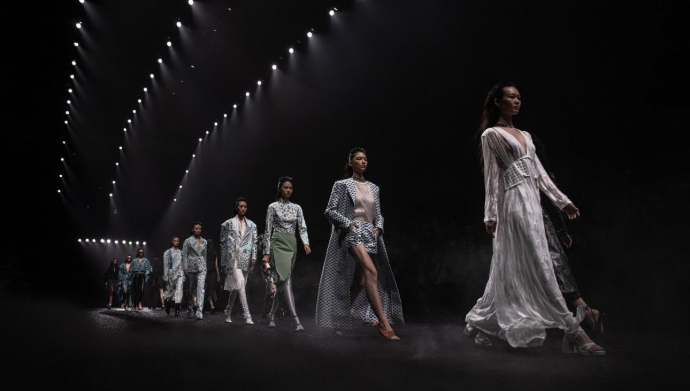
“ EIDM gives me the chance to meet the fashion and luxury professionals who are helping me break into this industry. It was also through EIDM that I was able to move into event production last year, working on numerous shows during fashion weeks in both Paris and Milan ”
Nicola – Bachelor Art Direction & Styling
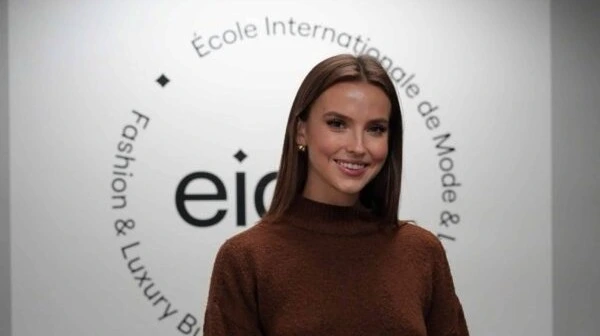
“ E-learning helped me build a real discipline in my work and quickly become more independent, while staying fully connected to the realities of the luxury sector ”
Audrey – Bachelor by e-learning, then on-campus Master's in Fashion & Luxury Management
Need help choosing your programme?
Our admissions advisers will help you choose the programme that matches your ambitions.